TL;DR
Agentic analytics is redefining BI with autonomous queries, semantic context, and transparent SQL on live warehouse data beyond dashboard-era limits. For three decades, analytics tooling has progressed in waves: reporting systems, dashboard BI, product analytics platforms, and then broader self-serve layers.
For three decades, analytics tooling has progressed in waves: reporting systems, dashboard BI, product analytics platforms, and then broader self-serve layers. Each wave solved a real problem and introduced a new one. We got better at producing data views, but we still struggle with the original promise: any stakeholder should be able to ask a business question and get a trustworthy answer in real time. Agentic analytics is the architecture aiming to close that gap. This guide defines the term precisely, explains the technical stack, and maps what this shift means for data teams and the organizations they support.
A brief history of how we got here
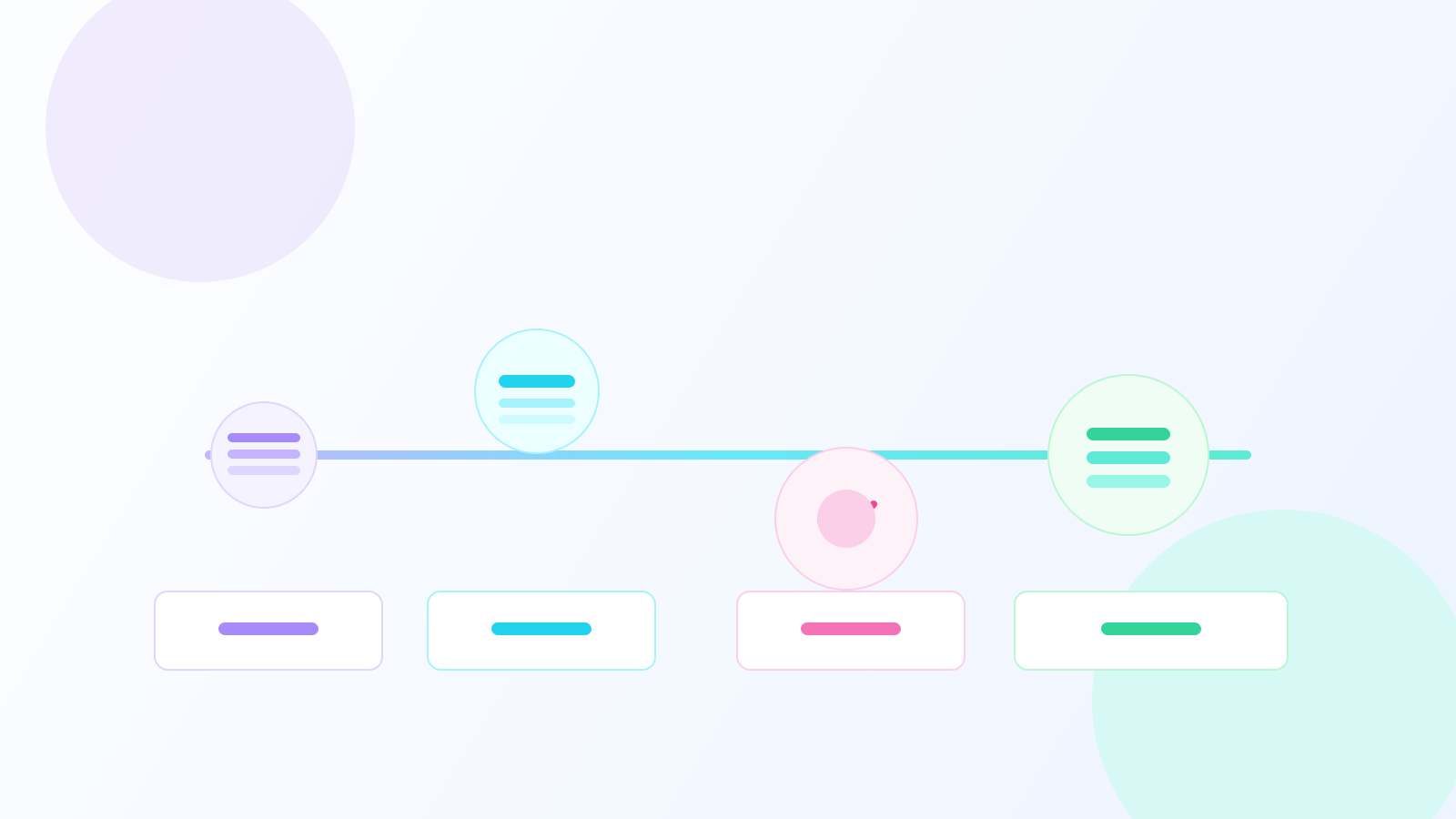
Reporting era (1990s-2000s): analysts wrote SQL and produced static reports. Distribution was slow, centralization was absolute, and non-technical teams were dependent by default.
Dashboard era (2010s): tools like Tableau and Looker improved visibility. More people could view the data, but relatively few could ask new questions without analyst help.
Product analytics era (2015 onward): event-centric tools made funnels and retention analysis easier for product teams, often at the cost of data duplication, rigid schemas, and escalating event-volume pricing.
Self-serve BI era (2018 onward): access widened, but many workflows still required SQL literacy or pre-modeled dashboard planning. The gap between question and trusted answer remained.
What makes analytics agentic?
Agentic analytics refers to AI-powered analytics systems that can understand a business question, decide what data is required, generate and execute the appropriate query on live sources, validate against business logic, and return a transparent answer without requiring manual execution at each step.
The "agentic" part comes from agent design: act toward a goal, observe outcomes, and adapt. In analytics, that means moving from passive query suggestion to operational answer delivery with governance.
- Autonomous query generation from natural language intent.
- Live warehouse access instead of copied or stale snapshots.
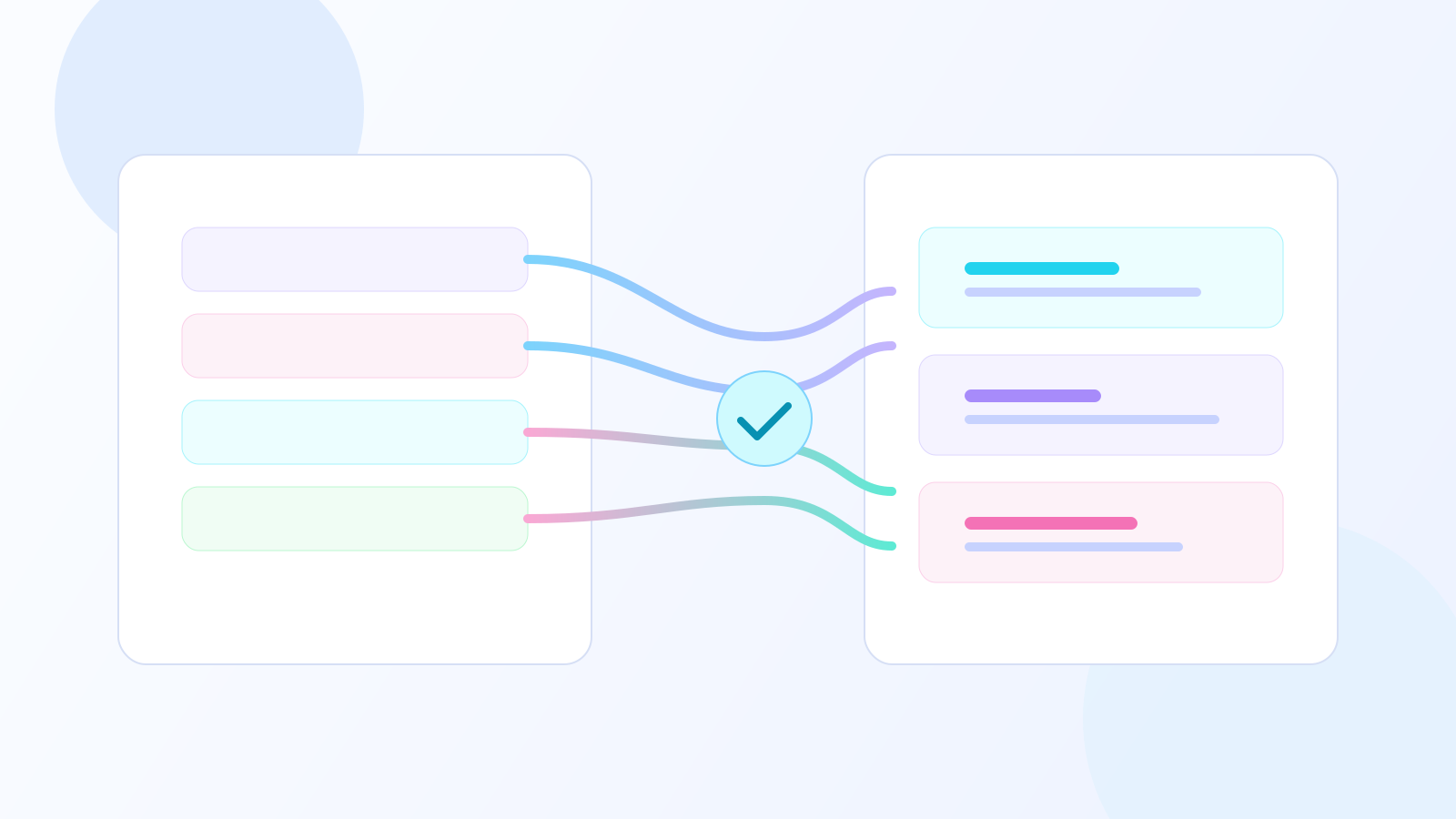
- Semantic understanding of company-specific metric definitions.
- Transparent execution where SQL is visible and auditable.
- Proactive monitoring that alerts when key metrics move unexpectedly.
How agentic analytics differs from previous generations?
Versus traditional BI: BI relies on pre-built assets and reactive consumption. Agentic analytics answers ad-hoc questions directly in natural language and can proactively surface changes before stakeholders ask.
Versus product analytics tools: many product suites depend on copied event stores and predefined analysis patterns. Agentic analytics works on warehouse-native data and is not constrained to funnel/retention templates.
Versus general LLMs: LLMs draft and explain. Agentic analytics executes, verifies, and shows work. That distinction drives reliability.
The technical architecture of an agentic analytics system
- Warehouse connector: reads schema and uses existing permissions (Snowflake, BigQuery, Databricks, Redshift).
- Semantic layer: maps business language to model entities and metric definitions, often tied to dbt artifacts.
- NL-to-SQL engine: translates intent into executable query plans.
- Execution layer: runs SQL on live warehouse data.
- Transparency layer: surfaces SQL and context for analyst review.
- Monitoring layer: tracks KPIs and flags anomalies via Slack/email.
In strong implementations, data never needs to leave your warehouse. This materially simplifies security posture and governance compared with copy-first architectures.
What agentic analytics means for different roles?
Data analysts: less repetitive query handling, more semantic stewardship and high-complexity analysis. Product managers: shorter feedback loops from question to action. Growth teams: faster experiment reads without SQL dependency. Data leaders: broader data access without linear headcount scaling.
CTOs: warehouse-native analytics with existing permission boundaries.
The open problems in agentic analytics
This category is promising but not magical. Semantic setup still takes alignment work. Complex, multi-step investigations still need human analysts in the loop. Trust adoption across non-technical users takes time.
And no AI layer can fully compensate for poor data quality upstream.
Where agentic analytics is heading?
Near-term evolution looks practical: better proactive insights, stronger root-cause assistance when KPIs shift, and more collaborative loops where AI and analysts iterate together. Over time, warehouse-native analytics systems will likely combine historical warehouse context with real-time signals more seamlessly.
If this is your first post in the series, pair it with What is an AI data analyst? for a role-level view of how these systems change daily workflows.
Mitzu is built on this agentic analytics architecture: warehouse-native connectivity, semantic understanding, transparent SQL, and proactive monitoring. If your team is evaluating the future of analytics in practice, start at mitzu.io or book a demo.
FAQ
What is agentic analytics?
Agentic analytics is an AI-driven analytics approach where software agents interpret questions, generate and run queries on live data, and return transparent results. It combines autonomy with governance by surfacing SQL and enabling review. The goal is faster, trustworthy decisions across teams.
How is agentic analytics different from traditional BI?
Traditional BI is largely dashboard-centric and reactive, often requiring pre-built assets. Agentic analytics answers ad-hoc questions directly and can proactively monitor KPIs. It shifts from report maintenance toward on-demand, context-aware analysis.
What is the difference between agentic analytics and product analytics tools like Amplitude?
Product analytics tools are powerful for event-centric use cases but often rely on predefined schemas and copied data models. Agentic analytics is broader, warehouse-native, and question-agnostic. It can answer beyond preset templates while preserving transparent query logic.
Does agentic analytics replace data analysts?
No. It automates repetitive request handling and improves speed, but analysts remain essential for definition quality, governance, and strategic interpretation. Teams gain leverage, not analyst obsolescence.