From conversation to trusted metrics.
Claude excels at broad AI assistance. Mitzu is purpose-built for product analytics on your warehouse—with semantic definitions and reviewable SQL so teams do not bet the roadmap on hallucinated numbers.
The Difference
General AI vs Trusted Analytics

Chat & reasoning
Context windows & uploads

Trusted Agentic Analytics
Live warehouse queries
Semantic layer & reviewable SQL on your data
Trusted by companies worldwide













Why teams add Mitzu alongside LLMs
Warehouse-resident data
Query live data where it already lives
Sync delay to silo
No copy-then-analyze loop for core workflows
Reviewable outputs
Inspect logic behind answers
Governed analytics at warehouse scale
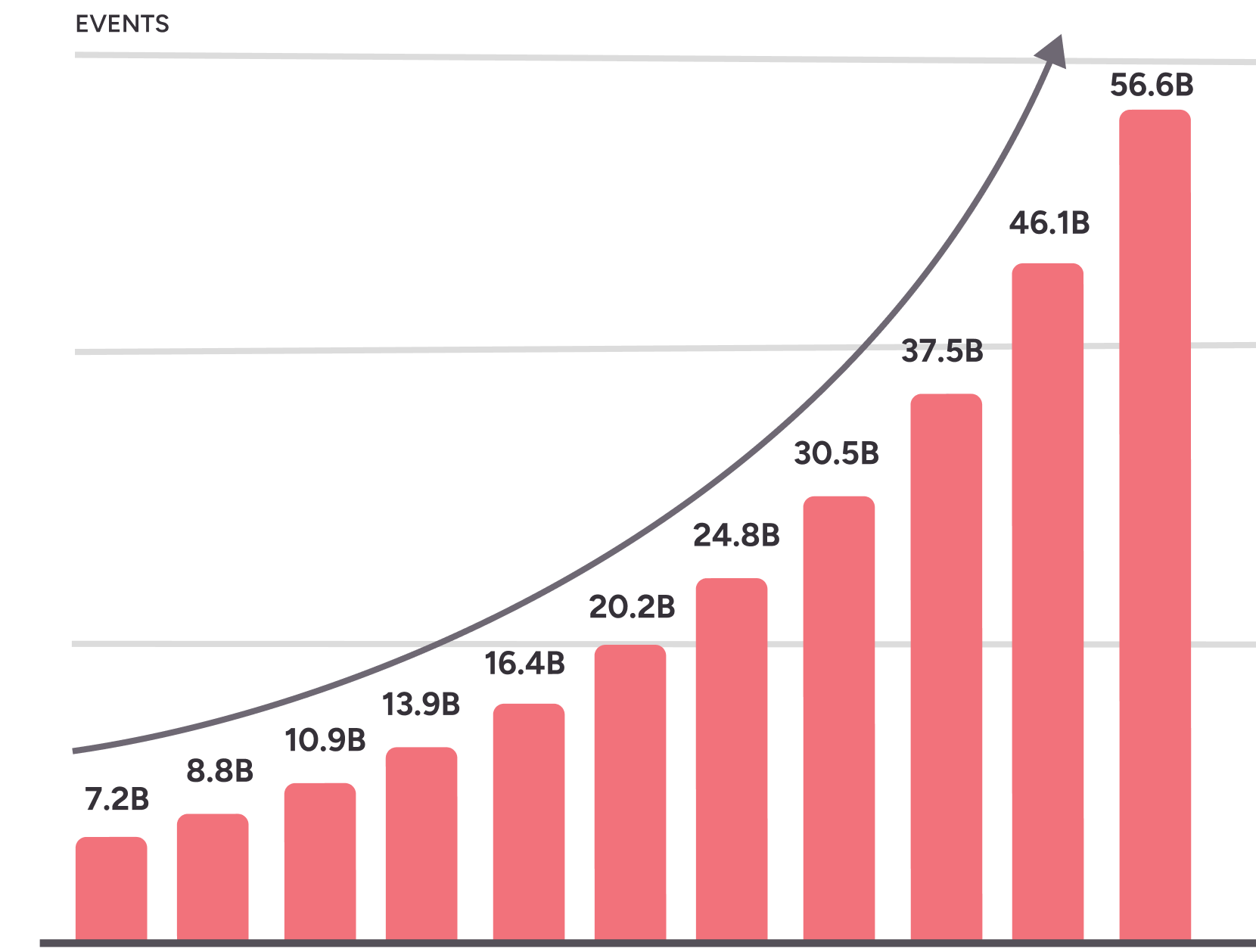
As event volume and stakeholder count grow, definition drift becomes expensive. Mitzu keeps product analytics tied to your warehouse and semantic layer—so scale does not mean more conflicting answers.
General LLM vs Warehouse-native analytics
- Not a dedicated semantic layer product
- Methodology must be validated by your team
 mitzu
mitzuAgentic semantic layer
AI agent
“Active users last week?”
Semantic layerData warehouse
Snowflake · BigQuery · Databricks
- Grounded in definitions your team controls
- Live queries on trusted warehouse tables
- Product analytics workflows built-in
Feature-by-feature comparison
| Features | Mitzu | Claude |
|---|---|---|
| Architecture & Data | ||
Primary purpose What the product is optimized for | Trusted agentic product analytics | General-purpose AI assistant |
Live warehouse queries Analyze data in place without siloing | Connector-dependent | |
Semantic layer grounding Metrics tied to governed definitions | ||
Product analytics primitives Funnels, retention, cohorts as first-class workflows | Build yourself / ad hoc | |
Consistent methodology Same funnel and cohort logic across users | Team must enforce | |
| Product Analytics Features | ||
Funnel analysis Multi-step conversion analysis | Assisted only | |
Retention analysis Cohort retention over time | Assisted only | |
User segmentation Behavior and attribute segments | Assisted only | |
User journeys Path and sequence exploration | Assisted only | |
Monitoring & alerts Ongoing KPI monitoring for teams | ||
Dashboards Repeatable views for stakeholders | Manual composition | |
| Trust & Governance | ||
Reviewable SQL Inspect generated logic | Varies by workflow | |
Metric alignment Inherit definitions from data engineering | ||
Audit-friendly workflows Suitable for regulated or high-stakes decisions | Varies | |
Single source of truth Same numbers as BI on warehouse data | Not guaranteed | |
| Implementation | ||
Time to value for PA Getting standardized product analytics live | Hours | Depends on prompts & review |
Self-hosted option Deploy in your environment | ||
Works with existing warehouse data Use historical events immediately | If connected & modeled | |
| Privacy & Security | ||
Data stays in your warehouse No copy required for core analytics path | Varies by deployment | |
Enterprise procurement path Vendor relationship for analytics platform | ||
Row-level security inheritance Respect warehouse RLS where applicable | From warehouse | Varies |
Plausible is not the same as correct.
General LLMs can produce fluent SQL that passes syntax checks but violates funnel order, windows, or identity rules. Mitzu is built to ground responses in how your team defines metrics on warehouse data.
- Reduce methodology drift across prompts
- Expose SQL for review where stakes are high
- Standardize product analytics beyond one-off chats
- Keep decisions aligned with BI and warehouse definitions
Warehouse SQL
Mitzu metrics
One assistant cannot replace your metric layer.
Claude does not automatically inherit your warehouse models and metric definitions. Mitzu is designed to connect governed warehouse semantics to everyday product analytics questions.
- Align PMs with engineering-owned definitions
- Fewer conflicting answers in Slack
- Easier reviews before exec readouts
From answers to operating rhythm.
Chat is great for exploration. Mitzu adds recurring dashboards, monitoring, and team-ready workflows on top of the same trusted warehouse data.
- Shareable views—not only scrollback in a thread
- Monitoring without rewriting prompts weekly
- Faster stakeholder alignment on definitions
Chat-only analytics
Mitzu
Operationalize answers without losing methodology.
Add Mitzu without ripping out Claude.
Connect your warehouse
Point Mitzu at Snowflake, BigQuery, Databricks, or another supported database.
Map events & metrics
Wire semantic definitions so funnels and cohorts match how you already model data.
Ship trusted analytics
Roll out dashboards and agentic workflows alongside—not instead of—your LLM stack.
Frequently asked questions
Ready for trusted agentic product analytics?
Pair Mitzu with your warehouse for governed metrics—alongside whatever AI assistants your team already uses.