TL;DR
Discover how to run privacy-first product analytics in 2026 while staying compliant with global data laws and generating actionable insights. Nowadays, data is at the heart of nearly every business decision and innovation.
Why Data Security and Privacy Matter More Than Ever in Business?
Nowadays, data is at the heart of nearly every business decision and innovation. That’s why keeping sensitive information safe and respecting privacy is more important than ever. Companies are under increasing pressure to secure their data and comply with a wide range of global regulations. If they fall short, they risk facing hefty fines, damaging their reputation, and losing the trust of their customers.
Key Principles for Managing Data Security and Privacy
Handling large datasets involves keeping them secure, respecting user privacy, and utilizing encryption, access controls, and monitoring to safeguard information and ensure adherence to user rights.
You must also comply with laws such as the GDPR, CPRA, HIPAA, and new state rules (e.g., DPDPA, NJDPA), which require transparency, consent, and robust security measures. For example, the GDPR requires explicit consent and breach reporting, while the CCPA grants users the right to opt out. To manage large volumes and complex rules, build privacy into your systems, automate compliance, and train your team to ensure data safety and customer confidence.
Top Data Protection and Compliance Tactics for the Digital Era
| Challenge | Solution | Why It Matters | Who Acts |
|---|---|---|---|
| Evolving regulations | Monitor, automate compliance | Tech adapts to laws, API compliance | Legal Tech, Compliance Eng. |
| Massive data volumes | Central governance | Scales data lakes/warehouses, prevents silos | Data Architects, Cloud Eng. |
| Data privacy & security | Encrypt, control access | Protects cloud/multi-cloud data | Security Eng., DevSecOps |
| Unauthorized access | Audit, monitor activity | Real-time anomaly detection, SIEM | SOC Analysts, Sec. Eng. |
| Non-compliance penalties | Train, automate retention | Lifecycle automation, reduces errors | Compliance, HR Tech |
| Vendor/third-party risk | Enforce vendor compliance | Secure API/SaaS, cloud partnerships | Vendor Risk, Cloud Arch. |
| Data discovery/classification | Inventory, classify data | Metadata analytics, lineage, AI governance | Data Eng., Metadata Mgrs |
The Impact of Modern Data Stacks on Compliance and Analytics
Today’s organizations rely on modern data stacks that combine data warehouses, data engineering, and analytics tools to meet both compliance and business needs. These systems utilize flexible pipelines (such as ETL, ELT, or newer methods) to securely manage and process large amounts of data, ensuring that sensitive information is protected and access is controlled to meet regulations like GDPR and CCPA.
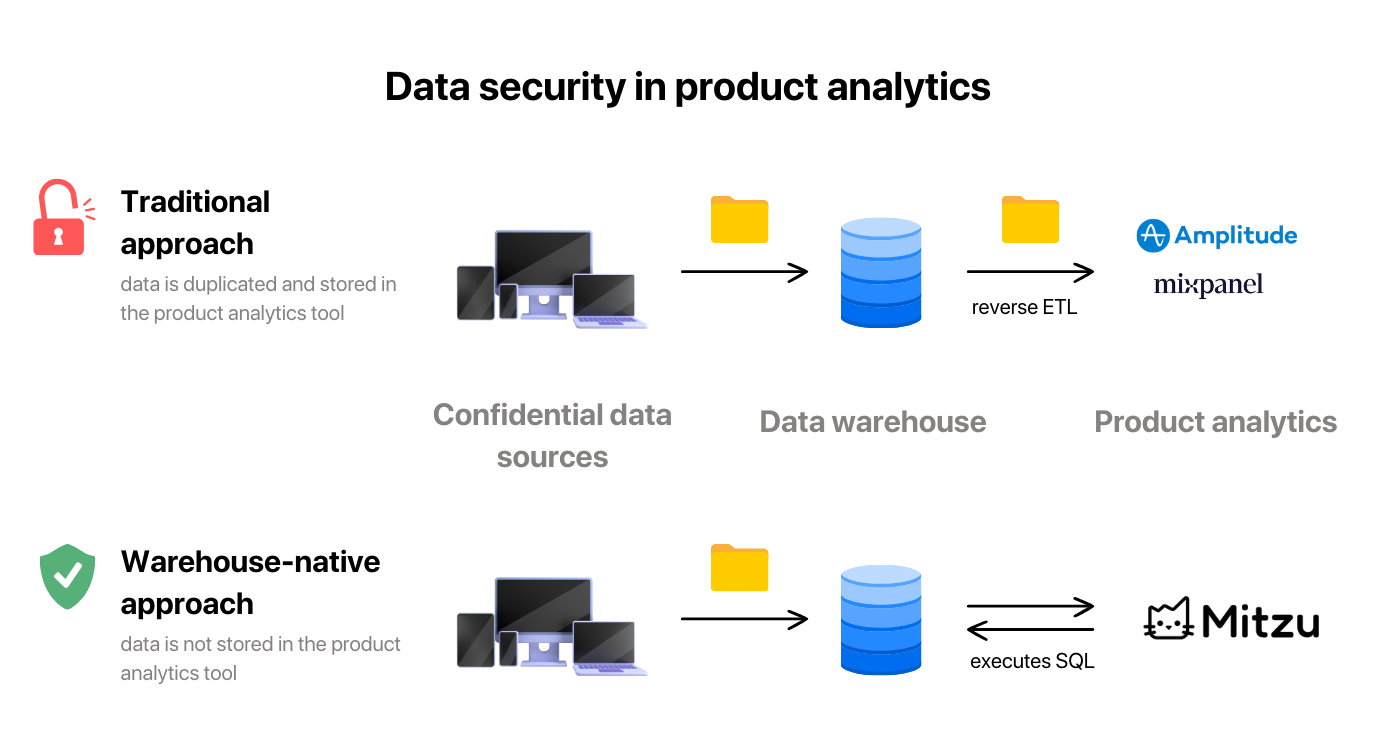
Data engineers build and maintain these pipelines, ensuring that data flows smoothly from its source to the warehouse, where it can be analyzed and utilized for valuable insights. However, third-party analytics tools often pose privacy risks, as data leaves your infrastructure and becomes vulnerable. Built-in governance features in secure platforms help ensure compliance and protect customer data.
How Warehouse-Native Analytics Tools Transform Data Compliance?
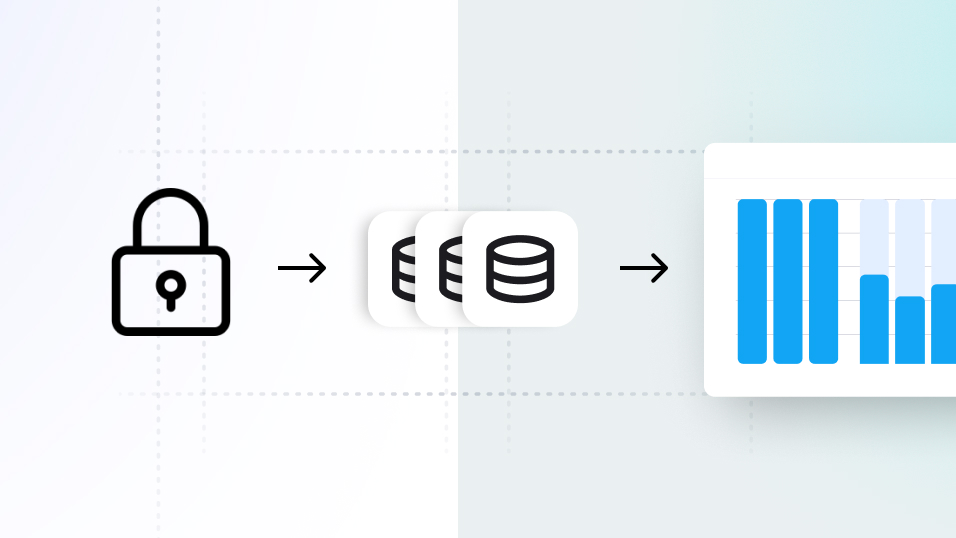
Warehouse-native product analytics tools, such as Mitzu, enable organizations to analyze data directly within their data warehouse, such as BigQuery, Databricks, Clickhouse, Snowflake, or Redshift, without needing to move data to external systems. This keeps sensitive information secure and minimizes the risk of exposure.
By utilizing the warehouse’s built-in security, encryption, and access controls, these tools enhance data governance and facilitate compliance with regulations such as the GDPR and CCPA. Data masking and anonymization further protect privacy while still enabling deep analysis.
Analytics happen right where your data lives, eliminating data silos and duplication. Automated SQL generation enables non-technical users to gain insights quickly, allowing teams to analyze user behavior, business metrics, and operational data in near real-time, all within a secure, compliant environment.
Key benefits include:
- Total control and visibility over data access
- Unified product, sales, support, and marketing insights
- Automated compliance and governance
- Scalable analytics without performance loss
The leading tool is Mitzu that deliver these advantages with scalable pricing and advanced features for high-volume datasets.