TL;DR
Replace data analyst with AI is the wrong framing; top teams automate repetitive tasks while analysts own governance, interpretation, and strategic decisions. Can you replace data analyst with AI?
Can you replace data analyst with AI? For most serious teams, the honest answer is no. You can automate a large amount of repetitive analyst work, but you cannot automate ownership of metric definitions, risk interpretation, and cross-functional decision context. Leaders who frame this as full replacement usually create quality regressions.
Leaders who frame it as analyst leverage usually create durable speed gains.
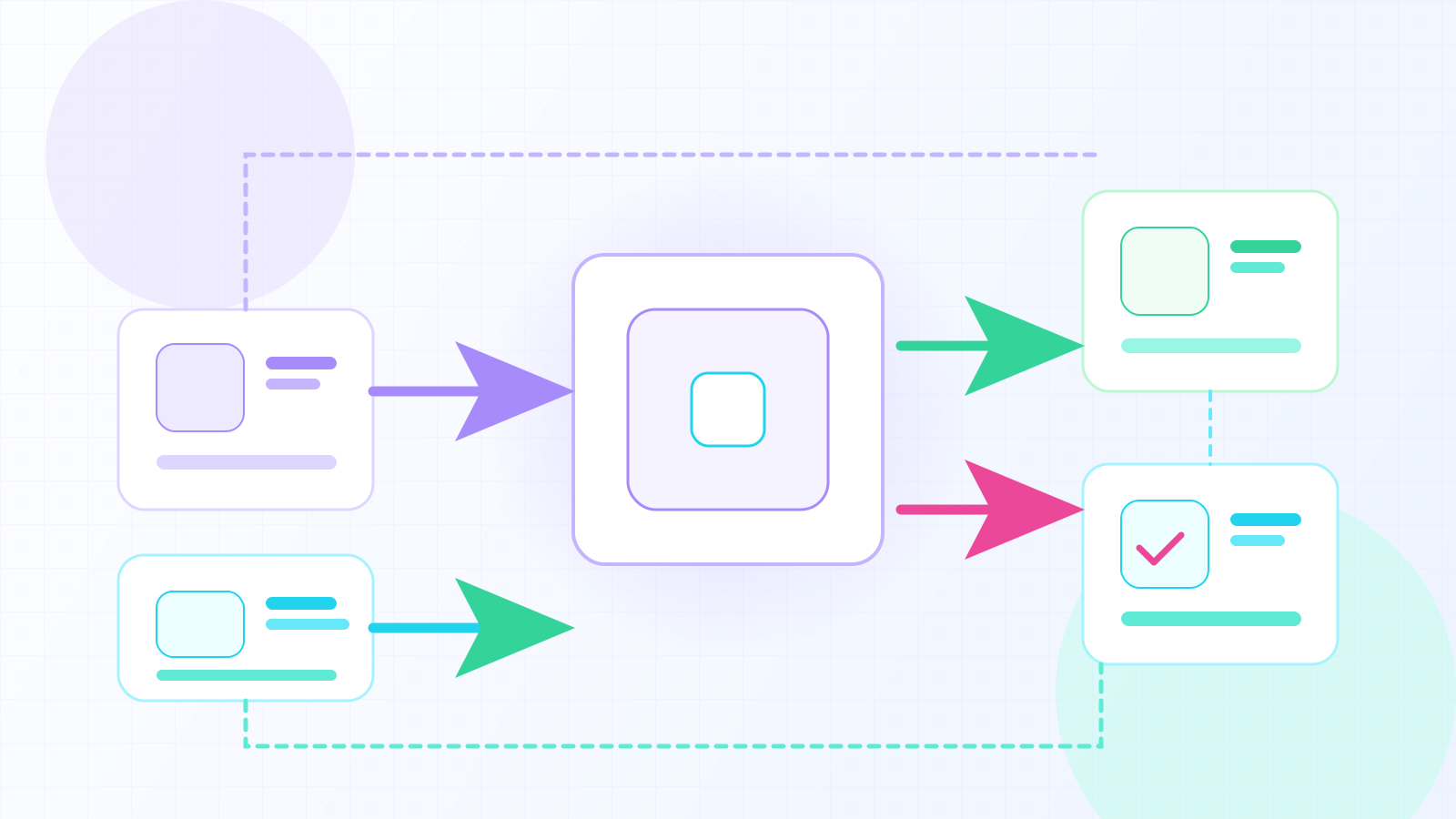
The market noise is understandable. AI interfaces look impressive, and many tasks that once required SQL now feel conversational. But analytics quality is not only about query generation. It depends on semantic governance, reproducibility, and accountability. If your organization wants a realistic baseline, combine this perspective with what an AI data analyst actually does, the process lens in agentic analytics workflows, and the cautionary patterns in hallucination prevention guidance.
Who this is for and who this is not for?
- For: data leaders deciding which analytics tasks to automate first without sacrificing trust.
- For: product and growth teams with long turnaround times for standard KPI questions.
- Not for: teams seeking immediate headcount reduction without process redesign.
- Not for: organizations that have not stabilized core metric definitions.
Replace data analyst with AI: evaluate work by task, not by title
| Task category | AI automation fit | Human analyst fit | Recommended model |
|---|---|---|---|
| Recurring KPI retrieval | High | Low | Automate retrieval and keep periodic analyst audits |
| SQL drafting for known questions | High | Medium | AI drafts/runs, analyst verifies sensitive outputs |
| Metric definition disputes | Low | High | Human-owned semantic contracts |
| Anomaly triage and causal interpretation | Medium | High | AI flags and summarizes, analyst validates causes |
| Executive narrative and strategic trade-offs | Low | High | Human-led interpretation with AI evidence support |
How mature teams implement this without chaos?
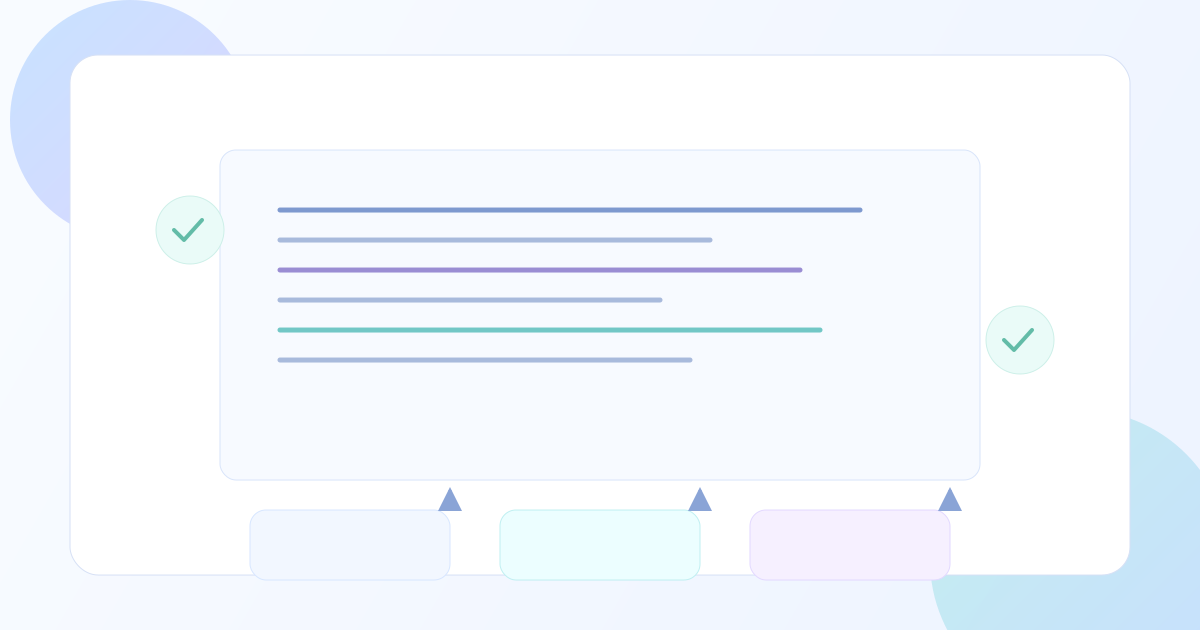
The strongest implementations do not launch broad self-serve on day one. They start with predictable request categories, introduce transparent automation, and retain analyst sign-off for high-impact questions. This lowers operational friction while protecting decision quality. If your team is currently buried in requests, map this rollout with the analytics ticket-queue diagnosis first.
- Identify repetitive question classes where definitions are already stable.
- Require generated SQL visibility and confidence signaling by default.
- Establish escalation paths for ambiguous prompts and financially material metrics.
- Track acceptance rate and correction rate, not just answer volume.
- Publish examples of accepted and rejected answers to train user behavior.
"AI should remove repetitive analyst labor, not remove analyst accountability."
Trade-offs leadership should make explicit
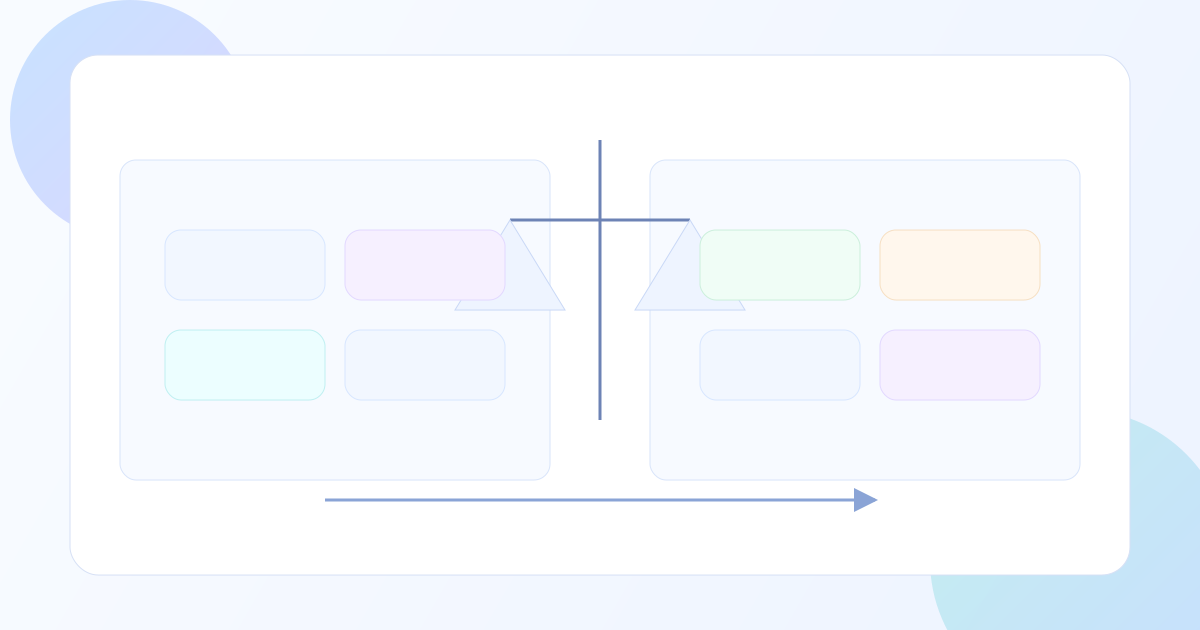
There are real trade-offs. Full autonomy feels faster but can increase semantic drift. Heavy review controls improve trust but can slow early throughput. The right point on that curve depends on decision risk. A practical pattern is progressive autonomy: automate low-risk workflows first, then widen scope once trust indicators are consistently healthy. This aligns well with verified SQL trust frameworks.
Tooling decisions should follow operating model decisions, not the other way around. Evaluate whether your platform supports transparent execution and role-based governance inside your product analytics process. For procurement and migration discussions, compare workflow constraints on Amplitude and Mixpanel. If your broader direction includes autonomous workflows, align this workstream with your AI agents strategy and validate assumptions with ChatGPT versus analytics-agent differences.
Teams that succeed here usually stop asking whether AI can replace analysts. They start asking which analyst tasks should never consume most of the week again. That framing moves the conversation from fear to design, and from hype to measurable operating improvement.
Role design playbook: what changes for each function
The transition works best when role boundaries are explicit, not implied. Analysts should own definition governance, exception handling, and strategic synthesis. Product managers should own hypothesis quality and decision follow-through. Growth teams should own experiment design and commercial prioritization.
Data leadership should own quality metrics and escalation standards. AI should own repetitive execution and summarization. This clarity reduces conflict and keeps teams focused on decision outcomes instead of tooling debates.
A common anti-pattern is to grant broad AI access and assume responsibilities will self-organize. They rarely do. Instead, teams should publish a lightweight responsibility matrix: who can consume answers directly, who must request analyst review, and which metric classes are always escalated. This matrix can be reviewed monthly as trust indicators improve. For teams building this from scratch, aligning with self-serve SaaS rollout guidance helps operationalize these boundaries faster.
Practical scenario: before and after analyst-leverage automation
Before: a growth manager asks for weekly conversion by channel and segment. An analyst receives the request, clarifies scope, writes SQL, checks edge cases, builds a chart, and returns results two days later. After: the growth manager asks in a governed AI channel, gets a transparent first answer in minutes, and escalates only if the question is ambiguous or decision-critical. The analyst now spends the saved time investigating why conversion changed, not merely retrieving the number.
This shift sounds small, but at scale it is profound. Hundreds of repetitive requests move out of the analyst critical path, while analytical quality can improve because expert attention is focused where interpretation matters. Organizations that capture this gain usually combine workflow redesign with architecture standards from trusted agentic analytics so governance and execution remain aligned.
How to communicate this strategy to executives?
Executive buy-in improves when you avoid role-threat language and present this as throughput and reliability optimization. Show baseline metrics: ticket volume, median response time, and correction rates. Then show target-state metrics: answer acceptance, decision latency, and analyst time allocation by task class. This reframes AI from replacement narrative to operational performance narrative.
Leaders should also hear clear limitations: AI will not resolve political definition conflicts, and it will not eliminate the need for human judgment in strategic trade-offs. Communicating limitations early builds confidence because stakeholders understand the implementation is reality-based rather than overpromised.
Role design examples: what changes for each function
For analysts, the role shifts from constant retrieval to quality stewardship and strategic analysis. Analysts spend more time curating semantic contracts, validating edge-case logic, and coaching teams on analytical framing. For product managers, the role shifts from waiting for answers to owning better question definition and decision follow-through. For growth teams, the role shifts from ad hoc dashboard interpretation to hypothesis-driven experimentation supported by faster evidence loops.
Leadership roles change too. Data leaders become designers of analytical operating systems rather than service managers of ticket queues. This means setting guardrails, deciding approval thresholds, and allocating analyst attention intentionally. Finance and operations partners benefit when this model is explicit because it reduces surprise metrics in planning cycles and clarifies which outputs are decision-grade versus exploratory.
Transition roadmap for teams worried about disruption
- Month 1: map current analyst workload and identify repetitive request categories.
- Month 2: automate one category and enforce review rules for high-impact outputs.
- Month 3: expand scope, publish quality metrics, and adjust role expectations by function.
- Month 4 onward: institutionalize semantic ownership and invest analyst time in strategic diagnostics.
Sources
- OWASP Top 10 (production control mindset)
- W3C Trace Context (workflow observability)
- IETF RFC 3339 (timestamp consistency standard)
- Trino SQL select reference
- PostgreSQL SQL tutorial
FAQ
Will AI replace data analysts?
In most organizations, no. AI replaces repetitive analytical tasks while analysts remain essential for governance, interpretation, and strategic decision support.
What should teams automate first?
Start with recurring KPI questions and known-query workflows with stable definitions. Keep high-impact and ambiguous analyses in analyst-reviewed paths.
How do we know if AI is actually helping analysts?
Measure ticket deflection, time-to-answer, acceptance rate, and correction rate together. Speed gains without trust improvements are not real productivity gains.
Why teams choose Mitzu?
Teams choose Mitzu when they want AI to amplify analysts instead of bypass them. The platform supports faster self-serve retrieval while keeping verified SQL, semantic ownership, and analyst review in place for high-impact decisions.
If your goal is to reduce repetitive requests without weakening governance, start with a task-level automation pilot. The simplest next step is to talk to Mitzu about analyst-leverage rollout design.